Central Asia
Tajikistan — Oshi palav
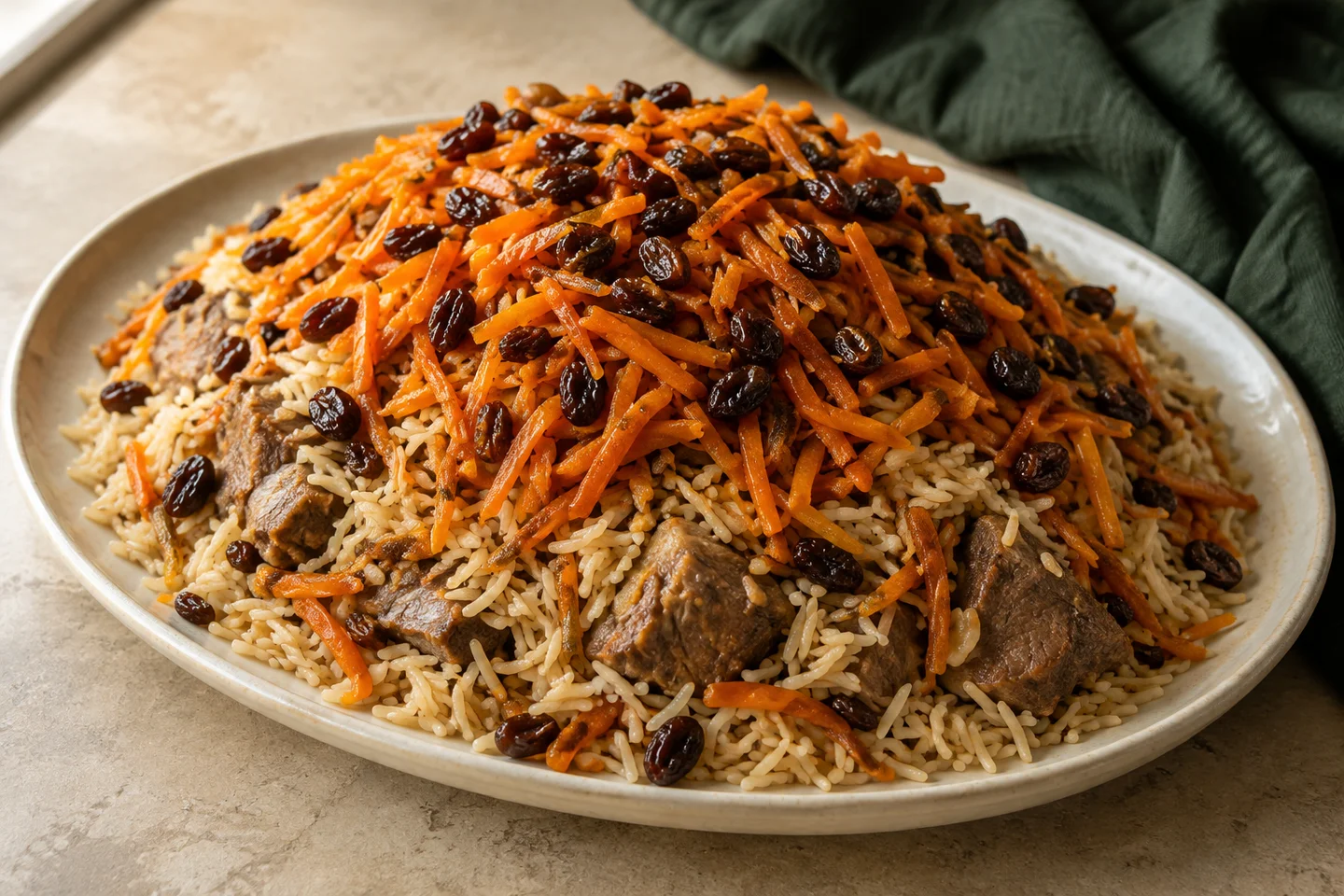
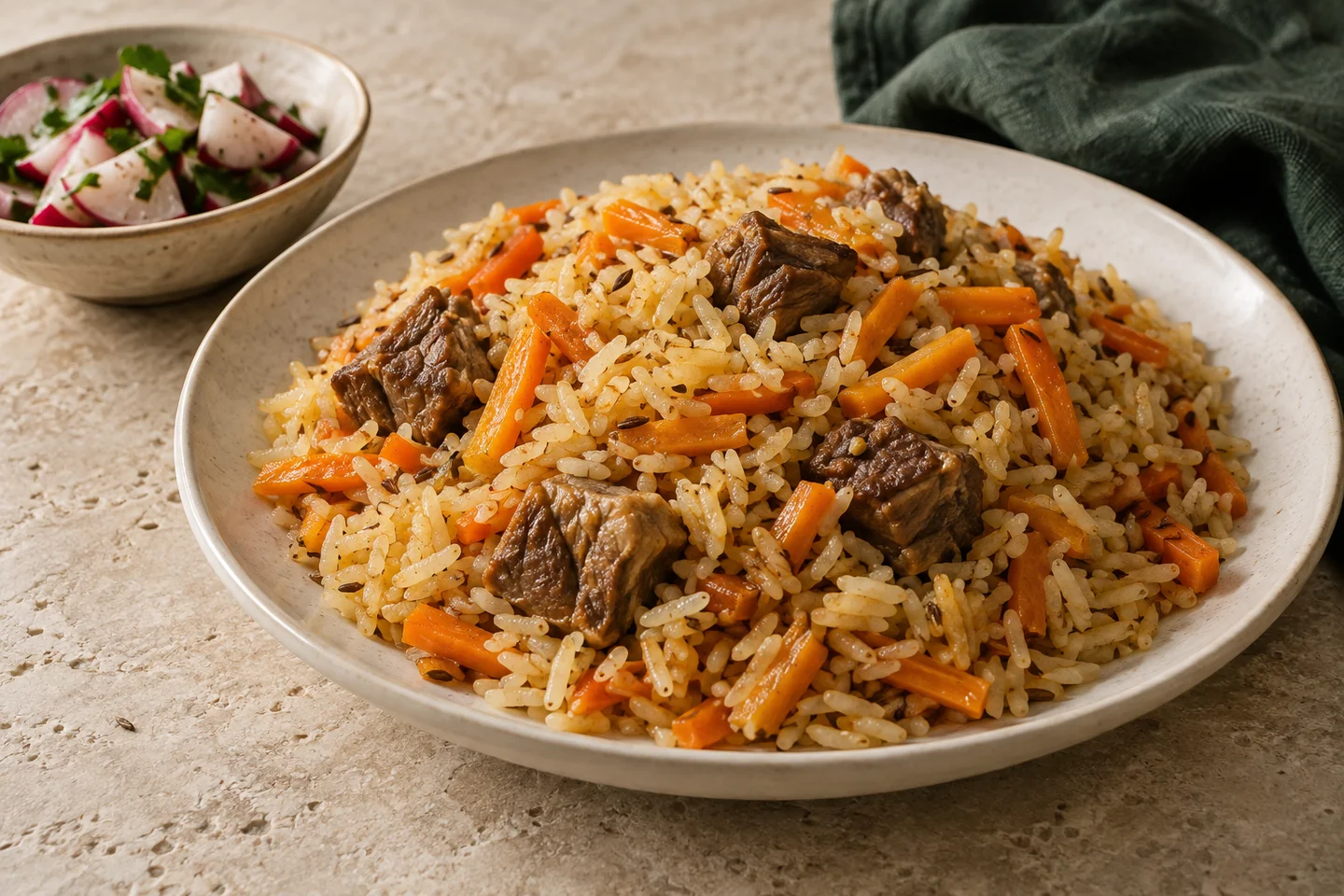
Tajikistan's oshi palav is made with rice, meat, vegetables and spices, and has a place in family meals, hospitality and ceremonies alike. Its value extends beyond the finished platter: cooking together and sharing a table are also part of the tradition.
Oshi palav: gathered around one kazan
Tajikistan's oshi palav is made with rice, meat, vegetables and spices, and has a place in family meals, hospitality and ceremonies alike. Its value extends beyond the finished platter: cooking together and sharing a table are also part of the tradition.
How are skills passed on?
Choosing rice, cutting carrots, adjusting heat and serving palov are often learned through hands-on participation. Family observation and master–apprentice experience add practical signs to the numbers in written recipes. Such experience makes it clearer when rice is ready for dam and how the zirvak is developing.
Neighbouring tables
Shared ingredients and kazan cooking methods create a close relationship with Uzbek palov. Additions can differ by household or region. Rather than reducing oshi palav to one unchanging standard, it is more useful to understand it through the rice, carrot cuts, meat and serving method actually used.